

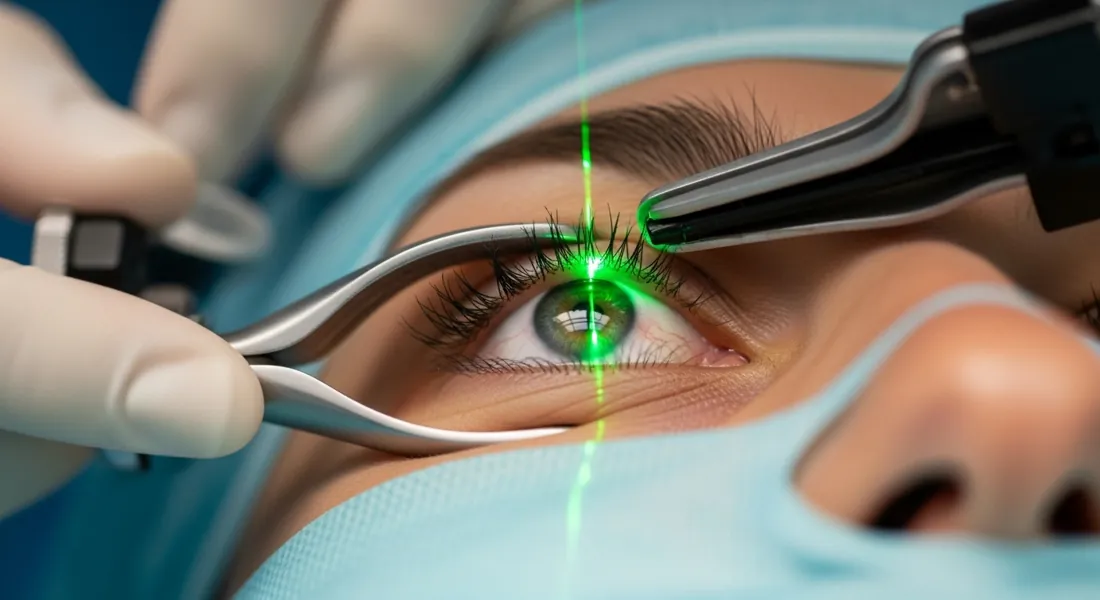
Laser eye surgery reshapes the cornea with a laser to reduce or remove refractive errors such as short-sightedness, long-sightedness and astigmatism. LASIK is one of the best-known methods; other laser techniques exist too.
Who may be a candidate?
- Adults whose glasses prescription has been stable for a while
- People with suitable corneal thickness and structure
- People with good eye health and no uncontrolled eye disease
Whether you are a candidate is decided by a detailed eye examination and corneal mapping.
How is it done?
- The eye is numbed with drops and a short procedure is performed.
- The cornea is reshaped; it usually takes minutes.
Recovery
- Eye drops are used for a few days; avoid rubbing the eyes.
- Vision improves noticeably within a short time in most people; it can take a while to stabilise.
- Follow-up appointments matter.
Things to consider
Dryness, glare and halos can be temporary. Not every eye is suitable for laser; alternative methods can be discussed with the physician.
This article is general information; diagnosis and treatment decisions are always made after a physician's examination.
This article is general information, not a diagnosis or treatment recommendation. Consult a physician for a personal assessment.