
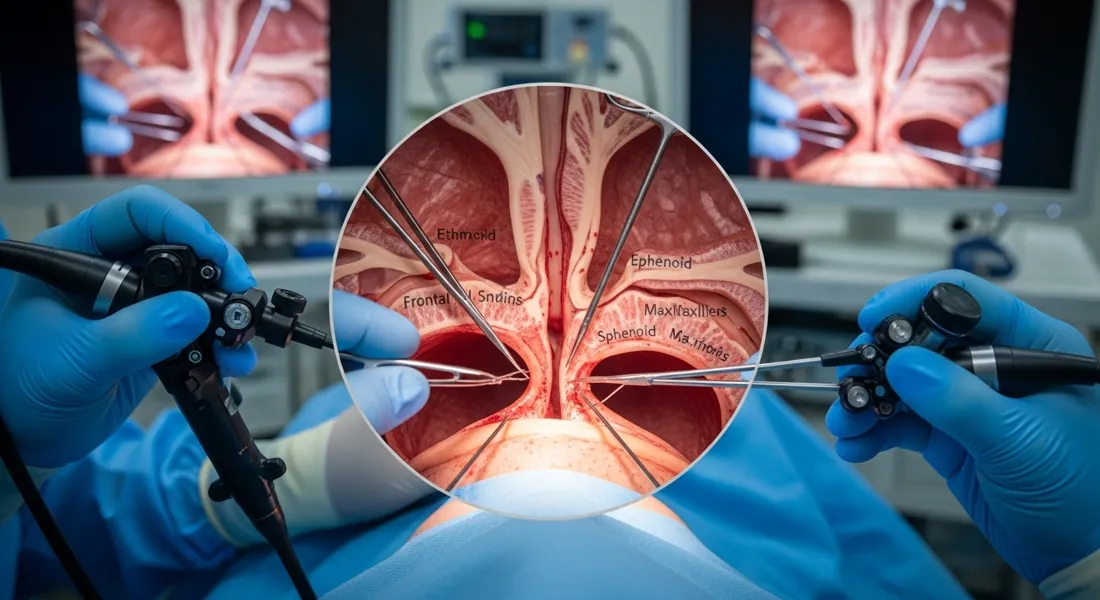
Septoplasty corrects a deviation in the nasal septum. Aftercare matters as much as the operation for reaching the goal of easier breathing.
The first 24 to 48 hours
- A feeling of fullness, mild discharge and blood-tinged fluid can occur.
- Keeping the head raised helps reduce swelling.
- You breathe through the mouth; if packing or silicone splints were used, your physician tells you the removal day.
The first week
- Do not blow your nose or pick inside it.
- Use the saline cleaning or sprays your physician recommends regularly.
- Sneezing with the mouth open reduces pressure in the nose.
- Take care with hot showers and very hot food in the first days, as they can increase bleeding.
Activity
- Heavy lifting, intense exercise and activities with a risk of impact are postponed until the date your physician allows.
- Ask your physician about glasses and sun protection.
Follow-up appointments
Removal of splints and packing, cleaning inside the nose and a healing check take place on the planned days. Do not skip them.
When to get help
Contact the clinic at once for bleeding that does not stop, high fever, increasing pain or foul-smelling discharge.
If the shape of the nose is planned together with septoplasty (septorhinoplasty), recovery resembles rhinoplasty recovery.
This article is general information; diagnosis and treatment decisions are always made after a physician's examination.
This article is general information, not a diagnosis or treatment recommendation. Consult a physician for a personal assessment.