

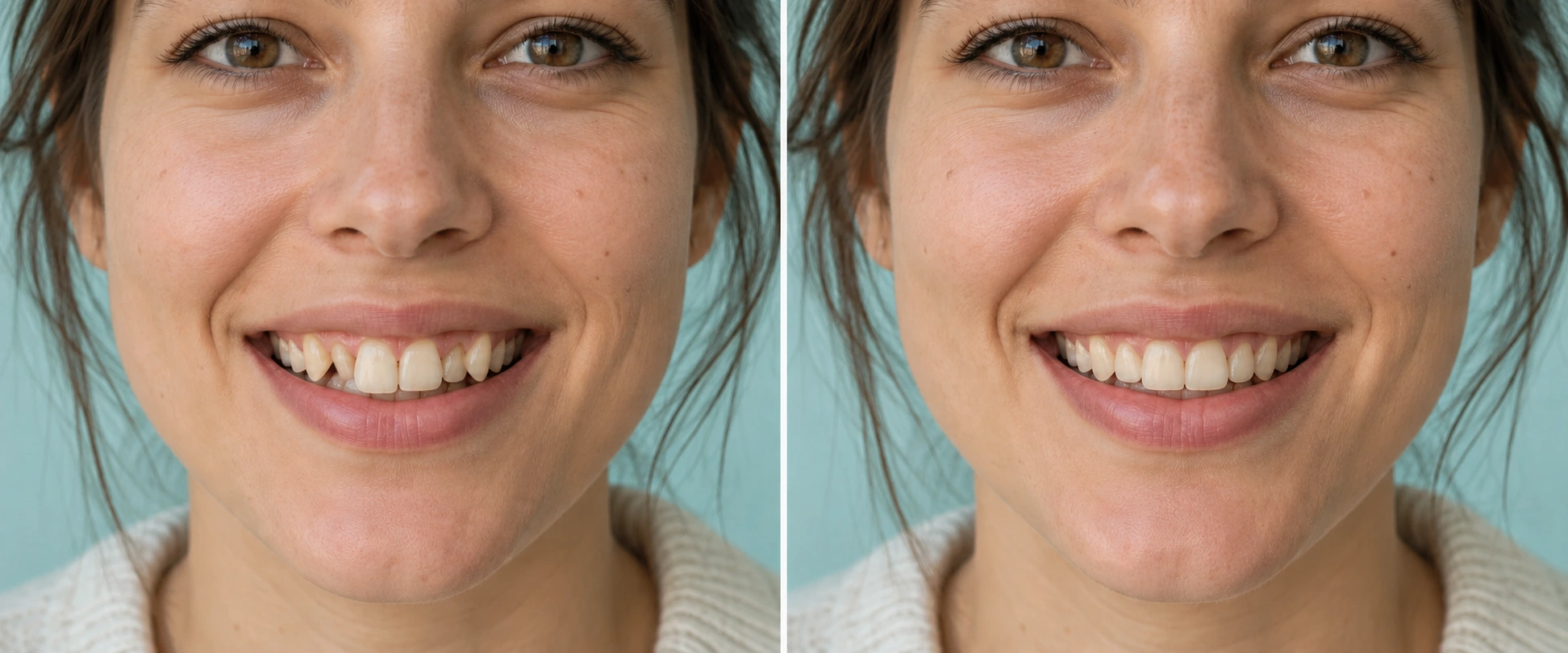
Teeth whitening aims to lighten the natural colour of the teeth. Tooth colour depends on genetics, age, eating habits and factors such as smoking.
Main methods
- In-office whitening: applied under control by the dentist, usually in one or a few sessions
- At-home whitening (custom trays): trays and gel prepared by the dentist and worn for a set time
- Combined approach: supportive use both in the office and at home
Who is it suitable for?
Adults whose decay and gum problems are under control. Existing fillings or crowns do not respond to the whitening gel, so colour matching needs planning.
Possible effects
- Temporary tooth sensitivity
- Gum irritation
For very dark stains or discolouration from within, whitening may not be enough; veneers or crowns can then be considered. Using over-the-counter products at random without an examination is not recommended.
This article is general information; diagnosis and treatment decisions are always made after a physician's examination.
This article is general information, not a diagnosis or treatment recommendation. Consult a physician for a personal assessment.