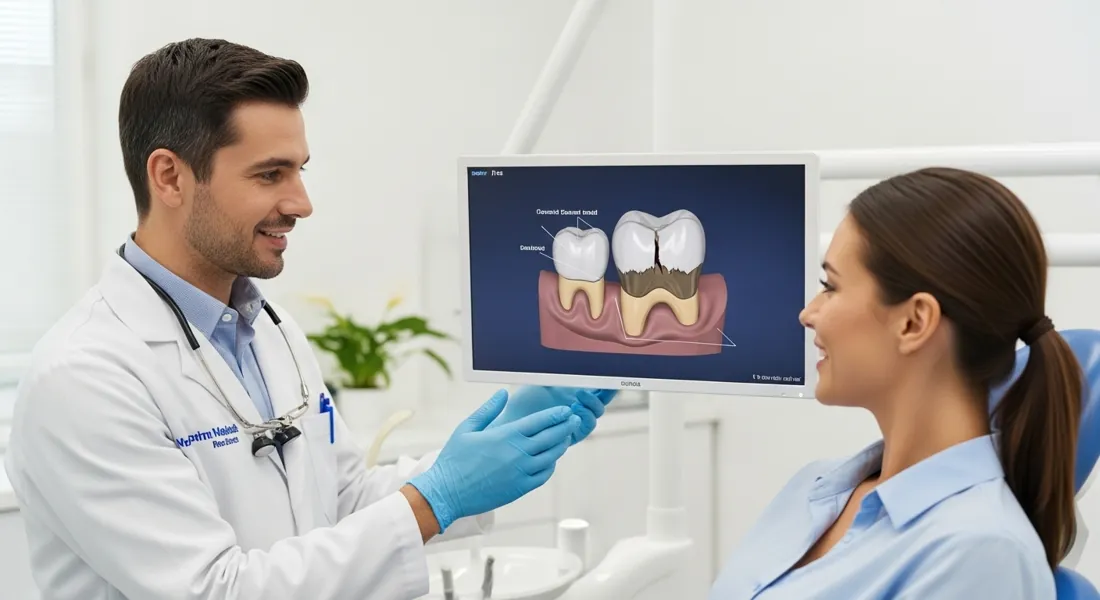


A zirconia crown is a dental crown made from a ceramic material known for its durability. It is widely used in aesthetic dentistry, smile design and the restoration of decayed or broken teeth.
Features of zirconia crowns
- Durable and suited to chewing forces.
- Its translucency can come close to the look of a natural tooth.
- It contains no metal, so the risk of a dark line near the gum is lower.
- It is generally well tolerated in terms of allergic reactions.
How it differs from porcelain-fused-to-metal
In porcelain-fused-to-metal crowns the substructure contains metal. In zirconia that structure is ceramic, which can give a more natural look especially at the gumline. Porcelain itself can also give excellent aesthetic results; the choice depends on the tooth position and the person.
How the process works
- Examination and planning of shade and shape
- Preparing the teeth for crowns (reduction)
- Impression or digital scan
- Temporary crown and laboratory production
- Fitting the permanent crown
Things to consider
- Reducing a tooth is an irreversible step.
- For habits such as clenching, a night guard may be advised.
- Regular check-ups and oral hygiene affect how long crowns last.
How to choose
Your aesthetic expectations, the condition of your teeth and your budget should be assessed with your dentist. A single material may not be best for everyone.
This article is general information; diagnosis and treatment decisions are always made after a physician's examination.
This article is general information, not a diagnosis or treatment recommendation. Consult a physician for a personal assessment.